REVIEW · SAPPORO
Hokkaido Asahiyama Zoo, Furano and Biei Bus Tour
Book on Viator →Operated by H.I.S.Co., Ltd. · Bookable on Viator
A full Hokkaido day without changing trains. This tour strings together Asahiyama Zoo and Shirogane Blue Pond with the kind of scenic stops most people would struggle to coordinate in one day. The main drawback is that the schedule runs tight, so you may feel rushed—especially around lunch.
I like that it’s set up to be low-stress from the start: an air-conditioned coach, clear stop times, and interpretation support through an app. If you want your day planned for you, the early departure also helps you beat some crowds before the big tourist flow hits.
One more thing to keep in mind: heavy traffic can force route swaps, and that can affect timing for a specific moment inside the zoo. In Hokkaido in peak season, time is the thing you can’t buy back.
In This Review
- Key points at a glance
- Why this Hokkaido bus day works so well
- The morning flow: Sapporo departure, service-area breaks, and pacing
- Asahiyama Zoo: close-up animals and Mogumogu Time
- Farm Tomita lavender fields: seasonal timing and the Irodori no Batake stop
- Shirogane Blue Pond: the color shot and the river reflection trick
- Patchwork Road, Seven Star Tree, and Ken and Mary Tree from the bus
- Lunch reality on a 10+ hour day
- Traffic, reroutes, and why Mogumogu Time can be the first casualty
- Price and value: what $85.20 gets you
- Who should book this tour, and who should skip it
- Should you book the Hokkaido Asahiyama Zoo, Furano and Biei Bus Tour?
- FAQ
- How long is the tour?
- What time does the bus depart from Sapporo?
- Where is the meeting point in Sapporo?
- What’s the last stop and where does the tour end?
- Is lunch included?
- Are admission fees included?
- How long do you stay at Farm Tomita?
- Is there interpretation help on the tour?
- What happens if roads are busy or closed?
- What if the tour is canceled due to weather?
Key points at a glance
- Asahiyama Zoo with a full 2-hour block plus Mogumogu Time when the schedule allows
- Farm Tomita lavender and Irodori no Batake with seasonal timing for how long you stay
- Shirogane Blue Pond’s color and reflection—you get a dedicated 30-minute photo window
- Patchwork Road views from the bus window for iconic trees without extra walking
- Air-conditioned transport with an on-board assistant and interpretation via app
- Max 40 travelers keeps the day from feeling like a cattle drive
Why this Hokkaido bus day works so well
This is a “hit the highlights” tour, but it’s built around the reality of Hokkaido—long distances, big sights, and seasonal scenery. Instead of picking one area and losing the rest of the region, you get a single, organized route that covers zoo time in the morning and the flower-and-pond lineup in the afternoon.
What makes it genuinely useful is the mix of experiences. Asahiyama Zoo gives you an up-close, animal-focused morning, then you pivot to Farm Tomita lavender and the signature blue of Shirogane Blue Pond. It’s the kind of day that helps first-timers see what Hokkaido is famous for, without the headache of coordinating buses or rentals.
Value-wise, the price is easier to justify than it sounds at first glance. You’re paying roughly $85.20 per person for a long day of transportation, with admissions included for Asahiyama Zoo and no admission cost for the other stops listed. Add in air-conditioning and interpretation help, and it becomes a practical way to spend limited time in Hokkaido.
The morning flow: Sapporo departure, service-area breaks, and pacing
Your day starts at 7:45 am at ANA Crowne Plaza Sapporo (by IHG). Expect the tour to leave on schedule, so plan to arrive a bit early and not test the “bus won’t wait” rule.
The ride is structured with a rest stop early on at Iwamizawa Service Area. You get about a 15-minute break there, and then you continue toward Asahikawa for the zoo.
That pacing matters. This tour doesn’t try to maximize every minute at every stop—it tries to keep the day moving. If you like photos but also enjoy walking slowly, you’ll want to move with purpose while you’re there, because the total time on the ground is capped at each location.
One small comfort: it’s an air-conditioned coach, which can feel like a lifesaver if you’re visiting outside mild weather. Also, the tour keeps things organized with a mobile ticket and an on-board assistant, with interpretation offered through an app rather than a full live tour conductor.
Asahiyama Zoo: close-up animals and Mogumogu Time
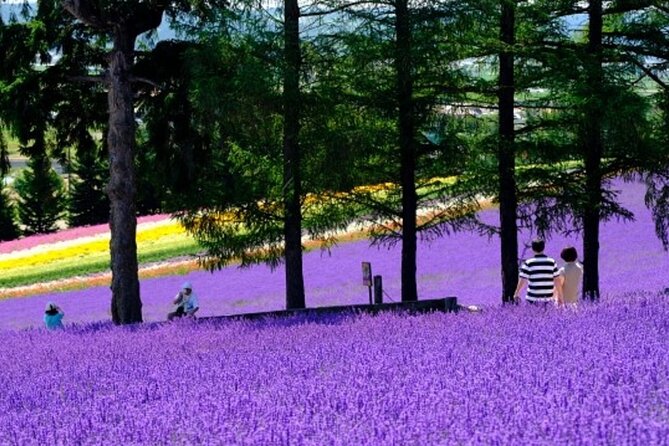
Asahiyama Zoo is the centerpiece here, with about 2 hours on-site and admission included. This is not a quick pass-through. The whole point is getting you into a setting designed to feel closer to how animals live.
The standout moment is Mogumogu Time, when zookeepers share insights while feeding the animals. If you’re going for this specific program, treat it as a priority. The tour notes that traffic and road conditions can adjust timing, and in those cases Mogumogu Time could be missed.
Practically, that means you should arrive with a plan for where you’ll head first. If you drift right when you get there, it’s easier to lose time you can’t refill later. Dress for cool air and bring a layer; zoos in Hokkaido can feel colder than you expect even when the sky looks bright.
Farm Tomita lavender fields: seasonal timing and the Irodori no Batake stop

Farm Tomita is your lavender-and-flowers block, with a stay that changes by season. For many departures (late spring and after October), you get about 30 minutes. In June through September, the stay is longer—around 50 minutes—so peak-season visitors get more time to wander.
You’ll spend time walking through rolling hills covered with lavender scent and visiting garden areas such as Irodori no Batake. This is the kind of spot where your photos look better when you take a few steps off the main path—because the hills create angles that are hard to copy from the same spot near the entrance.
One practical note: Farm Tomita is a popular photo stop, so you can expect slowdowns. Still, the time is set up so you can enjoy the gardens without turning this into an all-day hike.
Also, the tour lists heavy traffic as a general-season reality, and that can mean a stop may be adjusted if conditions are rough. If lavender is the big reason you booked, consider keeping your expectations flexible and your camera ready.
Shirogane Blue Pond: the color shot and the river reflection trick

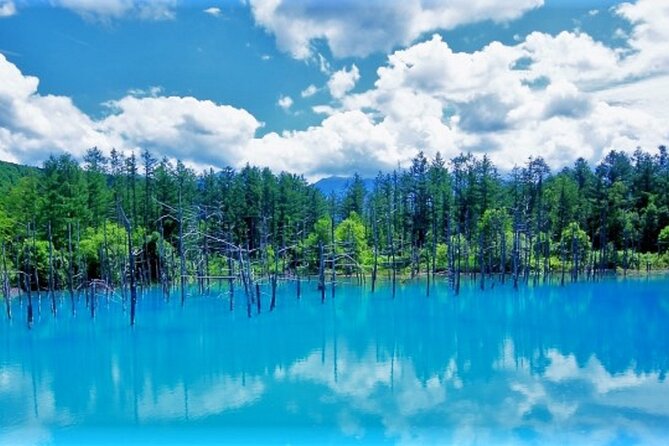
Then comes the signature Shirogane Blue Pond, with about 30 minutes and admission free. The main reason this spot is famous is simple: the water has a distinctive blue hue, and the nearby river can mirror that same color.
That “reflection” part is what makes this stop worth your time. If you aim your photos only at the pond surface, you’ll still get the famous shot, but you’ll miss the extra wow factor that comes from looking slightly to the sides and toward the water’s continuity.
Time is short on purpose, so move efficiently. Pick your 2–3 photo angles quickly, then slow down for a final pass when you’ve found the best light and angle.
Keep in mind the tour may change the location based on traffic, and it may swap to the Northwestern Hills if needed. So if the pond is your must-photograph, check whether a schedule change occurs on the day.
Patchwork Road, Seven Star Tree, and Ken and Mary Tree from the bus

This part of the itinerary is “quick scenic viewing” rather than walking time. The name refers to the patchwork-like patterns created by different crops planted in grid-style arrangements.
From the bus, you can also spot iconic landmarks such as the Seven Star Tree and the Ken and Mary Tree. The practical value here is that you get the look of these famous sights without spending additional time transferring, parking, or hiking between viewpoints.
The trade-off is also clear: if you want close-up, fence-to-branch photos, you might not get that from a window view. This stop works best if you’re happy capturing the overall shape from a moving or stationary vantage point and saving your energy for the zoo and the flower/pond time.
Lunch reality on a 10+ hour day

Lunch isn’t included, and that matters because the day is packed. The tour schedule includes rest stops at service areas, and the only longer on-site time is mainly at the zoo. That means your best bet for a proper meal is usually built around the zoo block, where you have more time to eat than at shorter scenic stops.
Even then, crowds can slow things down, so it helps to travel with a small backup plan. If you’re picky about food timing or have dietary restrictions, consider grabbing snacks during service-area breaks so you’re not hunting for a meal while everyone else is.
This is also where expectations should be honest: this tour is optimized for seeing several major highlights, not for long sit-down lunches or relaxed wandering.
Traffic, reroutes, and why Mogumogu Time can be the first casualty

The tour is clear that heavy traffic is expected during peak tourist season. If that happens, sightseeing locations may change, and the plan can adjust based on the actual road conditions.
One scenario mentioned is switching to Northwestern Hills depending on traffic conditions. Another scenario is taking alternate routes if an expressway section is closed, with rest stops at roadside stations (Michi-no-eki) or other places.
Most importantly for your day: if road conditions change, you might end up missing scheduled moments like Mogumogu Time at the zoo. You can’t control that, but you can control your mindset. Go in treating the zoo program as a bonus, not a guarantee.
Also, remember the bus departs on time and won’t wait for late arrivals. That rule exists to keep everyone moving, but it also means you should always be back at the bus with time to spare.
Price and value: what $85.20 gets you
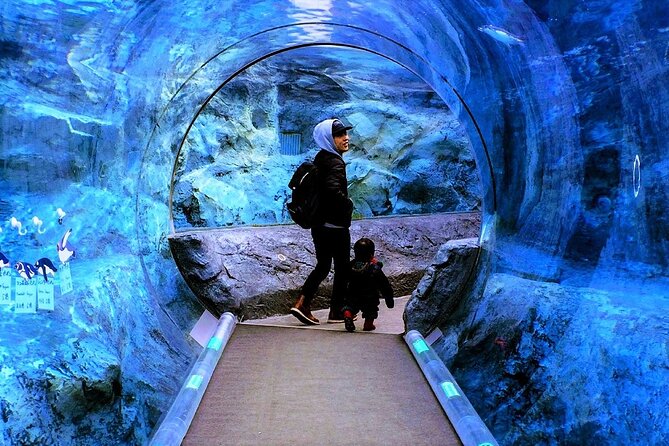
At about $85.20 per person, you’re buying a lot of convenience. You’re paying for a full-day coach tour out of Sapporo that includes:
- Air-conditioned transportation
- Admission fee for Asahiyama Zoo
- Multiple sightseeing stops, with admission listed as free for other locations
- An on-board assistant with interpretation via app
- A day plan that runs for roughly 10 hours 30 minutes
The real value shows up if you don’t want to manage multiple transfers. DIY in this region often means juggling timetables and dealing with seasonal crowds. Here, the tour handles the order of sights and the return timing back before evening.
If you already have your own car and you’re comfortable driving long stretches, the value might feel less dramatic. But for most people, especially first-timers, the day-long organization is the point.
Who should book this tour, and who should skip it
This fits best if you:
- Want a one-day sampler of Asahiyama Zoo, lavender, and the Blue Pond
- Prefer not to rent a vehicle
- Like having time blocks that tell you where to be and when
- Appreciate interpretation support via app so you can follow along in more than one language
You might want to skip or choose a slower plan if you:
- Hate rushed sightseeing
- Need long meal breaks and flexible pacing
- Only care about one or two stops and want deep time at those spots
- Are very sensitive to schedule shifts caused by traffic
Basically: if your priority is seeing several big-name Hokkaido sights in one day, this tour makes sense. If your priority is unhurried exploring, you’ll probably feel the tightness.
Should you book the Hokkaido Asahiyama Zoo, Furano and Biei Bus Tour?
I’d book it when you want maximum return on a limited Hokkaido schedule. The combination of Asahiyama Zoo, Farm Tomita, and Shirogane Blue Pond in one structured day is exactly what many people try to do—and fail at—when they plan on their own.
But book with the right expectations. This is a time-managed tour. If Mogumogu Time is your top goal, show up thinking you might only get the zoo experience itself, and treat Mogumogu Time as a welcome extra if timing holds.
If you want a smooth Hokkaido intro, this is a strong choice.
FAQ
How long is the tour?
The tour runs for about 10 hours 30 minutes.
What time does the bus depart from Sapporo?
The start time is 7:45 am.
Where is the meeting point in Sapporo?
It departs from ANA Crowne Plaza Sapporo by IHG, Kita 3-Jo, 1丁目-2-9 Nishi, Chuo-ku, Sapporo, Hokkaido.
What’s the last stop and where does the tour end?
It ends at Sapporo Station (3 Chome-4 Chome Kita 6 Jonishi, Kita Ward, Sapporo).
Is lunch included?
No, lunch is not included.
Are admission fees included?
Admission is included for Asahiyama Zoo. The other listed stops have admission tickets marked as free.
How long do you stay at Farm Tomita?
It depends on the departure season: about 30 minutes for late April to May and after October, and about 50 minutes for June through September departures.
Is there interpretation help on the tour?
There is an assistant on board, and interpretation may be provided via an app.
What happens if roads are busy or closed?
The tour may change sightseeing locations and take alternate routes via national highways if an expressway is closed. It may also adjust timing due to road conditions.
What if the tour is canceled due to weather?
If it’s canceled due to poor weather, you’ll be offered a different date or a full refund.