Blue water in Hokkaido looks unreal. This one-day tour strings together Asahiyama Zoo, Biei’s Aoi-Ike Blue Pond, and Farm Tomita’s flower fields into a simple, low-stress loop from Sapporo.
I especially love the zoo component because you get real time to see polar bears, arctic foxes, red pandas, and Hokkaido deer up close. I also like that the Blue Pond stop is built around the color itself, including the hint that the water looks even deeper at the far side.
One catch: you’re on a schedule. Each main stop is time-limited, and the tour runs in Japanese with only simple English, so you’ll want to go with the flow.
In This Review
- Key highlights you should not miss
- A full day that hits three big Hokkaido icons
- Asahiyama Zoo: where the animals are the whole point
- Aoi-Ike Blue Pond: the blue is the story
- Biei Patchwork Road views: quick hits from the bus window
- Farm Tomita: lavender timing matters, even on a tight schedule
- Campana Rokkatei and service-area breaks: small stops that make the day work
- Price and value: is $75 a smart deal?
- Language, audio, and comfort: how to make the most of the day
- When to go: matching your dates to blue pond and lavender
- Should you book this tour?
- FAQ
- How long is the tour?
- What is included in the tour price?
- Is lunch included?
- What language is used during the tour?
- Will there be tourist information during the tour?
- When is the best time to see lavender at Farm Tomita?
- Can I still enjoy Farm Tomita in November?
- Does the tour use a mobile ticket?
- What time does the tour return?
- What is the cancellation and refund policy?
Key highlights you should not miss
- Asahiyama Zoo animal time: polar bears, arctic foxes, red pandas, and deer with a long enough visit to actually enjoy it
- Aoi-Ike Blue Pond’s two-tone look: the water appears blue on the surface, and it gets even deeper looking toward the back
- Biei scenery from the bus: the Patchwork Road views are window-based, so plan for quick photo moments
- Farm Tomita by season: lavender is best from mid- to late July, but you still get flower culture and lavender products in fall
- Tour pacing with real breaks: service-area stops plus a Campana Rokkatei souvenir break keep you from feeling rushed the whole day
A full day that hits three big Hokkaido icons
This is the kind of day trip that works when you want variety without overthinking logistics. You start with a zoo built for animal lovers, then shift into Biei’s famous nature moments, and finish with flower fields and a dessert-and-souvenir stop.
The day runs about 10 hours, and it’s done in an air-conditioned vehicle. The group is capped at 45 people, which matters because it keeps the tour from feeling like a nonstop stampede.
Also, tickets are mobile, so you’re not hunting paper. If you hate last-minute admin, this helps.
Asahiyama Zoo: where the animals are the whole point
Asahiyama Zoo is your big morning anchor, and the time is generous enough that you can move at a comfortable pace. You’re looking at about 2 hours 30 minutes on-site, plus lunch time is at your own expense, so you can choose what fits your appetite and energy.
What I like about this stop is how direct it is. You go for specific animals: polar bears, arctic foxes, red pandas, and Hokkaido deer. If you’re the type who likes seeing animals do animal things (instead of just posing for photos), this is a great match.
Practical tip: plan to spend your “first pass” figuring out where you want to linger. The zoo can pull you in different directions, so don’t try to cram everything at once. With 2.5 hours, you’re not racing.
If you want a quick, filling meal, build your lunch around convenience near your route. The tour schedule gives you time for lunch on your own rather than a formal group lunch.
Aoi-Ike Blue Pond: the blue is the story
The Aoi-Ike Blue Pond stop is short, but it’s focused. You’ll get around 15 minutes at the pond, plus it’s a free admission stop. That means you can spend that time paying attention, not waiting in ticket lines.
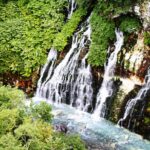
Here’s what makes it special: the pond’s color feels like it breaks the rules. The blue surface looks mysterious, and the explanation you’re given ties it to a natural phenomenon after the eruption of Mt. Tokachi. It’s not just scenery trivia. It changes how you look at the water.
What you should look for:
- The water surface appears blue, even though it’s a pond, not the sea
- If you walk and look toward the back of the pond, the river water looks even more deeply blue
The withered larch trees add to the mood. In plain terms, the whole scene can look surreal, especially if the light is right. Bring your camera, but also take a minute to just stare at it. Your phone won’t capture what your eyes notice first: that unnatural-looking color.
Biei Patchwork Road views: quick hits from the bus window
Between major stops, you’ll get a look at the Road of Biei Patchwork. This one is explicitly a scenery-from-window moment, with about a small transfer stretch rather than a formal walk.
Think of this as a “blink-and-you’ll-miss-it” photo window. If you want to shoot photos, have your camera ready and plan for fast opportunities rather than setting up a perfect shot.
One smart approach: treat it like background inspiration. If you love what you see, you’ll better appreciate Farm Tomita later, since the flower fields build on the same sense of Hokkaido’s open, farm-shaped geography.
Farm Tomita: lavender timing matters, even on a tight schedule
Farm Tomita is the flower-farm payoff, and it’s the stop that changes the most depending on when you go.
In spring to autumn, lavender is the star. The best time to see it is usually mid- to late July (and the tour guide notes it as usually mid-July through early August). If your dates line up with that window, you’ll likely feel like you walked into a postcard—except the air smells like plants and sun, which is way better than paper.
Season reality check:
- In May, October, and November, the scheduled Farm Tomita time is shorter (around 30 minutes)
- In November, you won’t be able to see flowers across the whole farm, with limited areas such as the greenhouse
- Even in November, you can still shop for lavender-based products at the farm store, including original cosmetics and aroma oils
What I like about this tour is that it doesn’t pretend every season is identical. You’re still going to experience the Farm Tomita brand, but you should adjust your expectations. In peak lavender, you chase color and scent. In late fall, you shift to atmosphere plus shopping.
Practical tip: if you’re going outside peak lavender season, focus on what’s available that day—plants in greenhouse areas, product displays, and any seasonal bloom pockets—rather than expecting the full summer layout.
Campana Rokkatei and service-area breaks: small stops that make the day work
A good tour isn’t just big sights. It’s also the “in between” moments that prevent you from feeling wrecked.
You’ll take rest breaks at service areas (about 15 minutes at Sunagawa Highway Oasis on the way out, and another 15 minutes at Iwamizawa Service Area later). These are handy for using the restroom, stretching your legs, and grabbing a snack if you didn’t plan ahead.
Then there’s Campana Rokkatei, a famous souvenir shop stop. You get around 30 minutes here, and it’s free to enter as part of the tour. This is where you can pick up gifts without needing to hunt all evening.
These breaks also help with one more issue: Hokkaido roads and weather can be unpredictable. The tour information warns that timing can shift due to traffic, and the tour may arrive earlier than scheduled depending on facility restrictions. In practice, that means you stay flexible and don’t treat the day like an exact minute-by-minute clock.
Price and value: is $75 a smart deal?
For $75, you’re paying for a full day of transportation plus access costs. The price includes air-conditioned vehicle and all fees and taxes. Admission is included for the zoo and the pond, and the Farm Tomita stop and Campana Rokkatei stop are treated as free entry within the tour structure.
Lunch is not included, so you’ll budget for food on your own at the zoo time. That’s the one missing piece. But because you get a set stop for lunch rather than trying to eat while moving, it’s usually an easy add-on.
So is it good value? For a Sapporo-based day trip that covers three major attractions plus scenic passing views, it usually is. The biggest value wins for me are:
- You don’t have to manage separate tickets for the big sights
- You get a structured route that still leaves you enough time to enjoy each stop
- You’re insulated from some of the day’s logistics hassles (like parking and changing plans)
If you’re the type who enjoys planning your own route and traveling slower, you might find you can do it cheaper. But if you want convenience, this tour is a fair deal.
Language, audio, and comfort: how to make the most of the day
Language on this tour is primarily Japanese, with English provided in simple English. The tour information also notes that there is no tourist information during the trip.
So here’s how to set yourself up:
- Download any key names you care about ahead of time: Asahiyama Zoo, Aoi-Ike, Farm Tomita
- Have a translation app ready for quick questions, especially if you wander off your expected path
- Expect that the richest details may be limited by the language setup
One more practical note: the tour doesn’t accept bus seat requests. If you’re sensitive to motion sickness, sit where you can tolerate the ride best by asking the staff when boarding, but don’t count on guarantees.
Finally, keep an eye on the schedule for early/late shifts. The tour may run earlier due to holiday breaks or facility restrictions. Also, buses can be delayed because of traffic jams or weather. Build in a calm mindset, and you’ll handle it better.
When to go: matching your dates to blue pond and lavender
You don’t control the weather, but you can control your priorities.
For lavender:
- Best timing is usually mid- to late July (often mid-July through early August)
- Flower timing can shift slightly due to inclement weather
- The tour could shorten sightseeing time depending on how conditions look that day
For November:
- Expect limited flower viewing outside greenhouse areas
- You can still enjoy lavender products at Farm Tomita’s shop
For Aoi-Ike:
- The “blue” look depends on conditions, just like with any natural color phenomenon
- Since you’re only there about 15 minutes, you’ll want to be ready to enjoy what you see when you arrive, not wait for perfect lighting
Should you book this tour?
Book it if you want one day that checks off major Hokkaido highlights without renting a car or building a complex schedule. This is especially good for animal lovers who also want scenery and flower-farm atmosphere.
Skip it (or think twice) if you hate time limits at each stop or you need robust English interpretation throughout the day. The tour is set up for Japanese-led communication with simple English support, so you’ll be happiest if you’re comfortable getting the gist and enjoying the sights directly.
If you’re going in late July to early August, I’d lean toward booking. That’s the season when Farm Tomita’s lavender is at its strongest, and the whole day feels like it’s hitting on all cylinders.
FAQ
How long is the tour?
The tour runs for about 10 hours.
What is included in the tour price?
It includes an air-conditioned vehicle and all fees and taxes. Zoo admission is included, and the Aoi Pond and other stops are treated as free entry within the tour.
Is lunch included?
No. Lunch is at your own expense.
What language is used during the tour?
The tour language is Japanese. English is provided in simple English.
Will there be tourist information during the tour?
No. The tour notes that there will be no tourist information during the tour.
When is the best time to see lavender at Farm Tomita?
The best time is usually from mid-July to early August, with lavender best in mid- to late July.
Can I still enjoy Farm Tomita in November?
Yes, but you should expect limited flower viewing outside areas such as the greenhouse. You can still buy lavender products like cosmetics and aroma oils from the shop.
Does the tour use a mobile ticket?
Yes, the tour features a mobile ticket.
What time does the tour return?
Return times are between 19:00 and 19:30.
What is the cancellation and refund policy?
You can cancel up to 24 hours in advance for a full refund. If you cancel within 24 hours of the start time, it’s not refundable.